Friday, August 7, 2009

Summer Fun with Dr. Weiss!


Its summer here with Dr. Weiss and team, a season full of vacations, adventures and great memories. Whether you are headed to a barbeque, a camping trip, or just having fun in the sun, we want to hear about it! Leave a comment on our blog and tell us about your summer!

Happy Travels,

-From Dr. Weiss

Friday, July 31, 2009

Brush Your Teeth! From Dr. Weiss

We at Dr. Weiss' office always emphasize the importance of daily oral care, including brushing your teeth! We found an adorable video from the American Dental Association that helps emphasis the importance of brushing your teeth. Check it out below!


--Dr. Weiss

Thursday, July 23, 2009

Braces 101 with Dr. Weiss

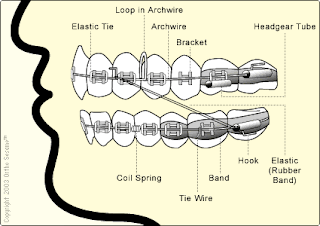
Should you need to call Dr. Weiss in case you sustain any damage to your braces, we can help you more effectively if you can tell us exactly which piece is in trouble! Here’s a handy diagram and corresponding list of all the parts that make up your braces.


Elastic Tie: Tiny rubber band that fits around the bracket to hold the archwire in place.


Archwire: The main wire that acts as a track to guide the teeth along. It's changed periodically throughout treatment, as teeth move to their new positions.

Loop in Archwire: Frequently used for closing space left by an extraction. Many archwires don't have a loop.

Bracket: Small attachment that holds the archwire in place. Most often, a bracket is cemented directly onto the tooth's surface, eliminating the need for a band.

Headgear Tube: Round, hollow attachment on the back bands. The inner bow of the headgear fits into it.

Coil Spring: Fits between brackets and over archwire to open space between teeth.

Tie Wire: Fine wire that is twisted around the bracket to hold the archwire in place.

Band: A thin ring of metal fitted around a tooth and cemented in place. The band provides a way to attach the brackets to the tooth.

Hook: Welded or removable arm to which elastics (rubber bands) are attached.

Elastic (Rubber Band): Small rubber band that is hooked between different points on the appliance to provide pressure to move the teeth.

-Dr. Weiss

Friday, July 17, 2009

Age 7 is the Magic Number For An Orthodontic Assessment


Many parents assume they must wait until a child has all of his or her permanent teeth, only to find that treatment would have been much easier if started earlier. Some orthodontic problems are easier to correct while the jaw is still growing. Consequently, the American Association of Orthodontists and Dr. Weiss recommend that every child have an orthodontic check-up no later than age seven.

What’s so great about age seven? Enough permanent teeth have arrived for an orthodontist to make a determination about whether any problems are present. The first molars have come in, providing an opportunity to check for malocclusion, or “bad bite.” Also, the incisors have begun to come in, and problems such as crowding, deep bites, and open bites can be detected.

Orthodontic evaluation at an early age provides one of two positive outcomes: For some, early identification or problems will lead to easier or shorter orthodontic treatment in the future. For others, a healthy prognosis will provide immediate peace of mind.

Early evaluation, of course, may signal a need for early treatment. For some children, early treatment can prevent physical and emotional trauma. Aside from spurring on years of harmful teasing, misaligned teeth are also prone to injury and detrimental to good oral hygiene.

If you have any further questions or would like to bring your child in for a consultation, give Dr. Weiss a call at 901-767-7370.

Friday, July 10, 2009

Patient Reviews for Dr. Weiss

Our patients have sent us some great compliments about Dr. Weiss, take a look at some of our favorites!


Thus far, Dr. Weiss and his staff have been incredibly courteous and knowledgeable. I'm looking forward to my treatment and experience over the next 20 months! ~ Tiffany M.

He is so good with our daughter, and very personable. He knows what he is doing and knows what kids need. Our daughter has been so comfortable with Dr. Weiss. ~ Gabrielle R.

I like that Dr. Weiss explains everything clearly on what’s about to happen. I also appreciate his phone call to check-up on our son. I thought that was very nice. ~ Brandon R.


Dr. Weiss
does awesome work and I saw results so quickly. His charges are affordable and his charges don't change mid way thru the process. I'm very pleased and I'll tell everyone how wonderful he and his staff are. ~ Arthur G.

I really like Dr. Weiss' friendly, relaxing manner. His staff is also very friendly and helpful with any problems that come up. ~ Greer J.

Thursday, July 2, 2009

Bottled Water May Be Behind Tooth Troubles: Dr. Weiss Explains


We at Dr. Weiss's want you to know that as more families turn to bottled water and away from the tap, they may be missing out on one important ingredient that most brands of bottled water fail to include: fluoride!

As of 2005, bottled water is second only to soft drinks as the most popular drink in the United States, beating out milk, juice, and – more significantly – tap water. Between 2001 and 2006, the amount of bottled water sold in the U.S. rose an average of 10% per year. And many dental health specialists point to bottled water’s increased popularity as the culprit behind rising rates of cavities.

Because fluoride helps strengthen teeth, it is an important component of maintaining good oral health. The benefits of fluoride were noticed in the early part of the twentieth century, when researchers found communities with low levels of tooth decay. It turned out that these towns had measurable levels (around 1 part per million) of fluoride in their drinking water.

Beginning in the 1940s, communities have fluoridated their water supplies, and dentists have seen a significant decline in cavities ever since. The American Dental Association endorses both community water fluoridation and the use of fluoride-containing products as a safe means of preventing tooth decay. Between tap water and toothpaste, most of us get sufficient amounts of fluoride.

But if your family avoids fluoridated tap water in favor of ever-more-popular bottled water, you could be missing out on the levels of fluoride necessary to make a difference in your oral health.

If bottled water is your water of choice, check the label to make sure that your brand contains fluoride. As of a 2006 decision, the FDA allows bottled water containing .6 to 1.0 milligrams per liter of fluoride to carry a label stating that fluoridated water may reduce the risk of dental cavities or tooth decay. The ADA has backed this decision.

Of course, simply drinking fluoridated water is not a magic ticket to perfect teeth. To keep your choppers in tip-top shape, it’s important to brush and floss daily and avoid sugary sweets, in addition to maintaining your fluoride intake and visiting us at Dr. Weiss's regularly.

Monday, June 29, 2009

Cardiodontics: The Heart Mouth Connection from Dr. Weiss


If you have been told you have periodontal disease (also known as gum disease or periodontitis), you're not alone. An estimated 80 percent of American adults currently have some form of the disease! Periodontal diseases range from simple gum inflammation to serious disease that results in major damage to the soft tissue and bone that support the teeth. In the worst cases, teeth are lost.

Gum disease is a threat to your oral health. Research is also pointing to health effects of periodontal diseases that go well beyond your mouth. So we at Dr. Weiss want to let you know some interesting facts and ways to treat the disease.

What is Periodontal Disease?

"Perio" means around, and "dontal" refers to teeth. Periodontal disease is an infection of the structures around the teeth, including the gums and the bones that hold the teeth. The earliest stage of periodontal disease is gingivitis – an infection of the gums. In more severe forms of the disease, all of the tissues are involved, including the bone. Bacteria that live and reproduce on the teeth and gums cause periodontal disease.

Symptoms of Periodontal Disease

Symptoms may include the following:
--redness or bleeding of gums while brushing teeth or using dental floss
--halitosis, or bad breath
--gum recession, resulting in apparent lengthening of teeth
--"pockets" between the teeth and gums indicating that the bone which holds the teeth in the mouth is dissolving
--loose teeth
Gum inflammation and bone destruction are largely painless. Hence, people may wrongly assume that painless bleeding after teeth cleaning is insignificant, although this may be a symptom of progressing periodontitis. If your hands bled when you washed them, you would be concerned. Yet, many people think it's normal if their gums bleed when they brush or floss.

Periodontal Disease Affects Your Health

Periodontal disease is a putrid, festering infection of the mouth. Bacteria and inflammatory particles can enter the bloodstream through ulcerated and bleeding gums and travel to the heart and other organs. In recent years, gum disease has been linked to a number of health problems. Researchers are studying possible connections between gum disease and:
--Heart disease: Gum disease may increase the risk of heart disease. Gum disease also is believed to worsen existing heart disease.
--Stroke: Gum disease may increase the risk of the type of stroke caused by blocked arteries
--Diabetes: People with diabetes and periodontal disease may be more likely to have trouble controlling their blood sugar than diabetics with healthy gums.
--Premature births: A woman who has gum diseases during pregnancy may be more likely deliver her baby too early and the infant may be more likely to be of low birth weight.

Combating Periodontal Disease

--See your dentist! See your dentist every six months for a checkup! Regular professional cleanings and checkups make you feel good, look good, and could be a lifesaver!
--Brush and floss daily. Take your time and do it right!
--Use an anti-bacterial mouthwash. Daily use of an anti-bacterial mouthwash helps to disinfect the teeth and gums, and reduces the number of bacteria.
--Straighten your teeth. Crowded teeth are nearly impossible to keep clean. Orthodontic treatment can greatly reduce inflammation and periodontal disease.

--Dr. Weiss